The energy transition is entering a new phase. While renewable energy generation has proved not only to be a reality but a resounding success, the current challenge for citizen-led renewable energy is learning to cope with energy abundance during peak hours. How are energy communities across Europe rising to meet this challenge?
At the 2026 European Energy Communities Forum, held in the Latvian seaside city of Jūrmala on 6 May 2026, the SmartCORE project organised a session entitled "Shared Energy and Flexibility: Behind the Buzzwords." The session brought together energy community practitioners who are actively innovating with energy flexibility measures.
Speakers included Vincent Dierickx (EnergieID), Clément Follet (Enercoop) - both SmartCORE project partners -, Nuri Palmada (Som Energia), and Michael Hübner (NoREST Initiative, Clean Energy Transition Partnership), with facilitation by Zoë Ledwith (REScoop.eu).
Consumption and generation trends: tools for optimised energy matching
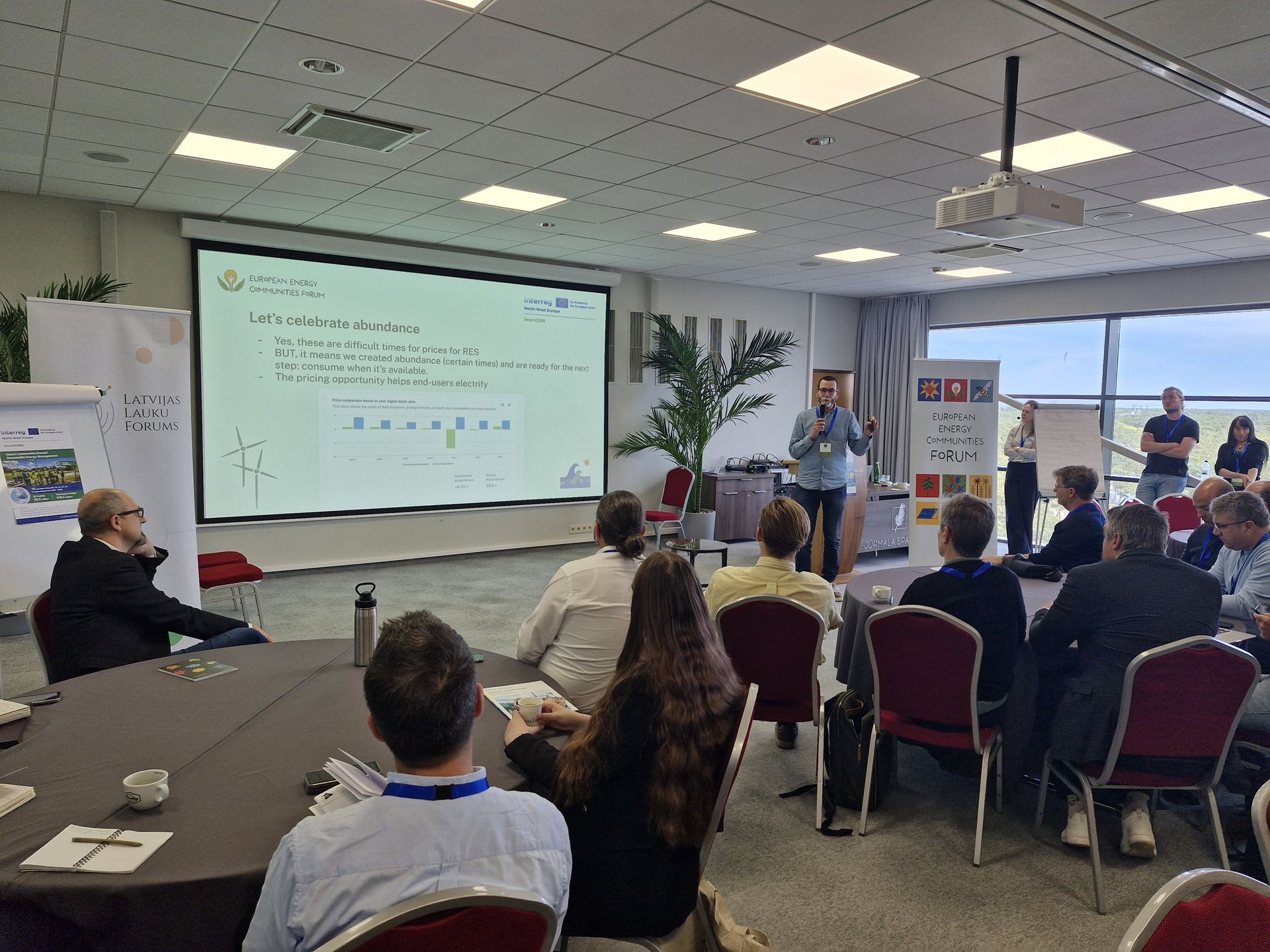
Vincent Dierickx of EnergieID walked participants through a series of charts illustrating energy consumption and generation trends, highlighting both the challenges and opportunities facing individual consumers and energy communities alike. Monitoring tools, he argued, are an essential starting point: they enable both households and communities to identify the moments when clean power is available at the lowest price. Above all, Dierickx delivered an uplifting message to the community energy movement: renewable energy abundance is something to be celebrated. It represents the realisation of a foundational step in the energy transition.
Citizens as active participants in flexibility
Flexibility solutions cannot rest on technical measures alone; the social dimension is equally critical to maximising the consumption of renewable energy. The collective effort of engaged citizens can make a decisive difference.
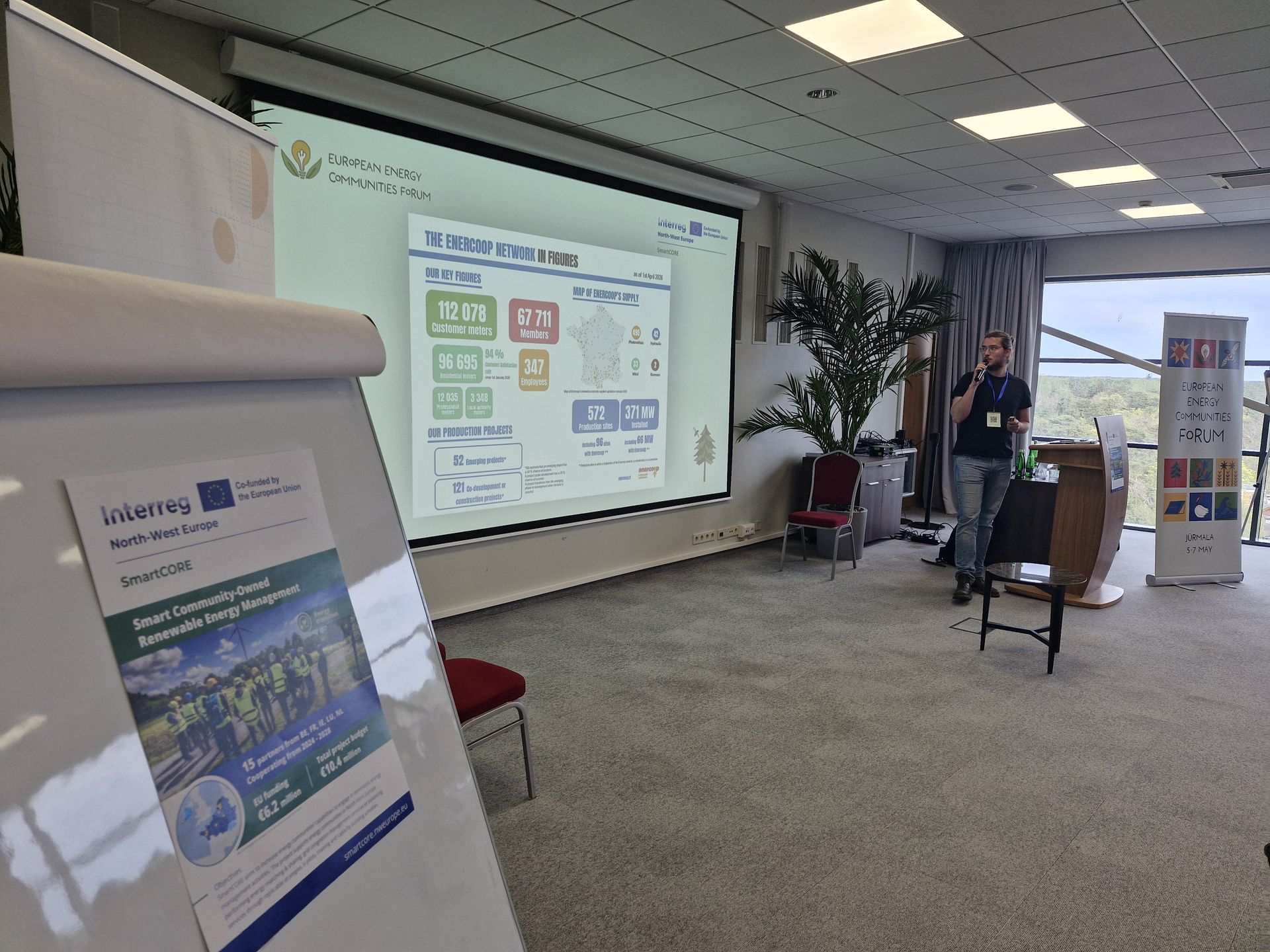
French energy cooperative Enercoop has accumulated significant experience in integrating flexibility into its operations. Clément Follet described how, through projects such as SmartCORE and REScoop VPP, the cooperative has built a robust set of technical skills, enabling it to take on roles in grid balancing and energy matching. Equally important have been the strides made on the member engagement side: awareness campaigns, educational initiatives, and the introduction of flexibility tariffs have all helped drive uptake among members.
One particularly inspiring example is a partnership with NeoLoco, a solar-powered bakery that has restructured its working schedule around energy availability, deliberately concentrating energy-intensive tasks during periods of abundant solar generation.
Facing community energy dilemmas and the importance of hybridisation
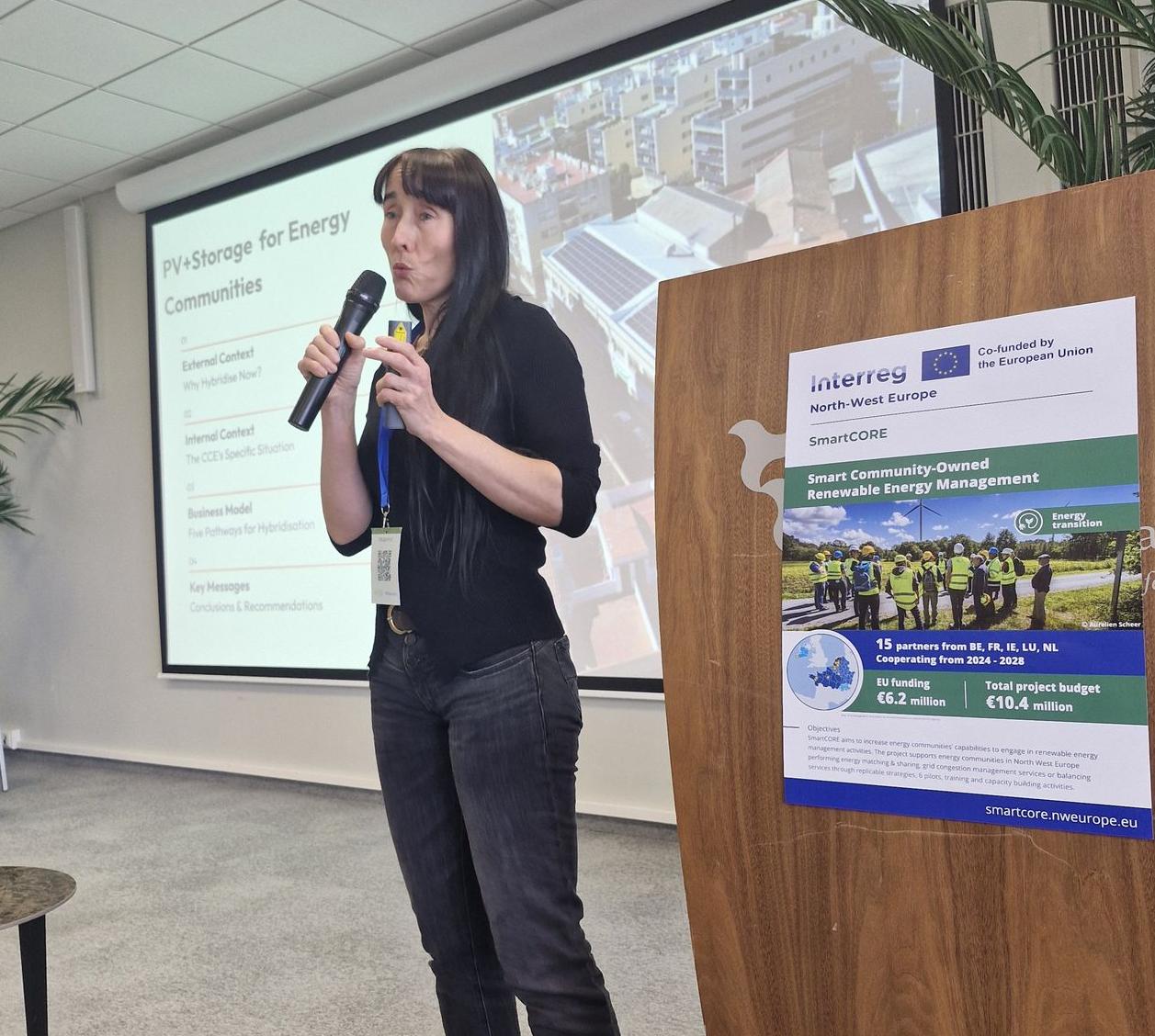
Nuri Palmada of Spanish cooperative Som Energia focused on the phenomenon of "solar cannibalisation" - the tendency of solar power to undermine its own economic value as more capacity is added to the grid. She identified energy storage as a natural and logical complement to solar generation, helping to prevent both grid congestion and revenue erosion.
Palmada also presented energy matching as a meaningful step forward for energy communities, while acknowledging a structural tension it creates. As more members adopt individual self-consumption systems, those who generate surplus energy outside of solar consumption hours add that excess to the output already coming from collective photovoltaic plants. For the cooperative acting as an energy retailer, this accumulation of surpluses becomes increasingly difficult to absorb and distorts its commercial operations.
Drawing on Som Energia's experience, she also cautioned energy communities against overestimating the role of services to distribution system operators (DSOs). While these can provide some additional revenue, they remain an uncertain income stream today and should not be treated as a foundation of the business model. More broadly, she argued that energy communities should not be exposed to the volatility of electricity markets. Power Purchase Agreements (PPAs) are therefore the most natural commercial instrument available to them — a way to trade energy at a fair, stable price that reflects the true cost of production rather than market speculation.
Integrated energy systems driven by innovation and citizens
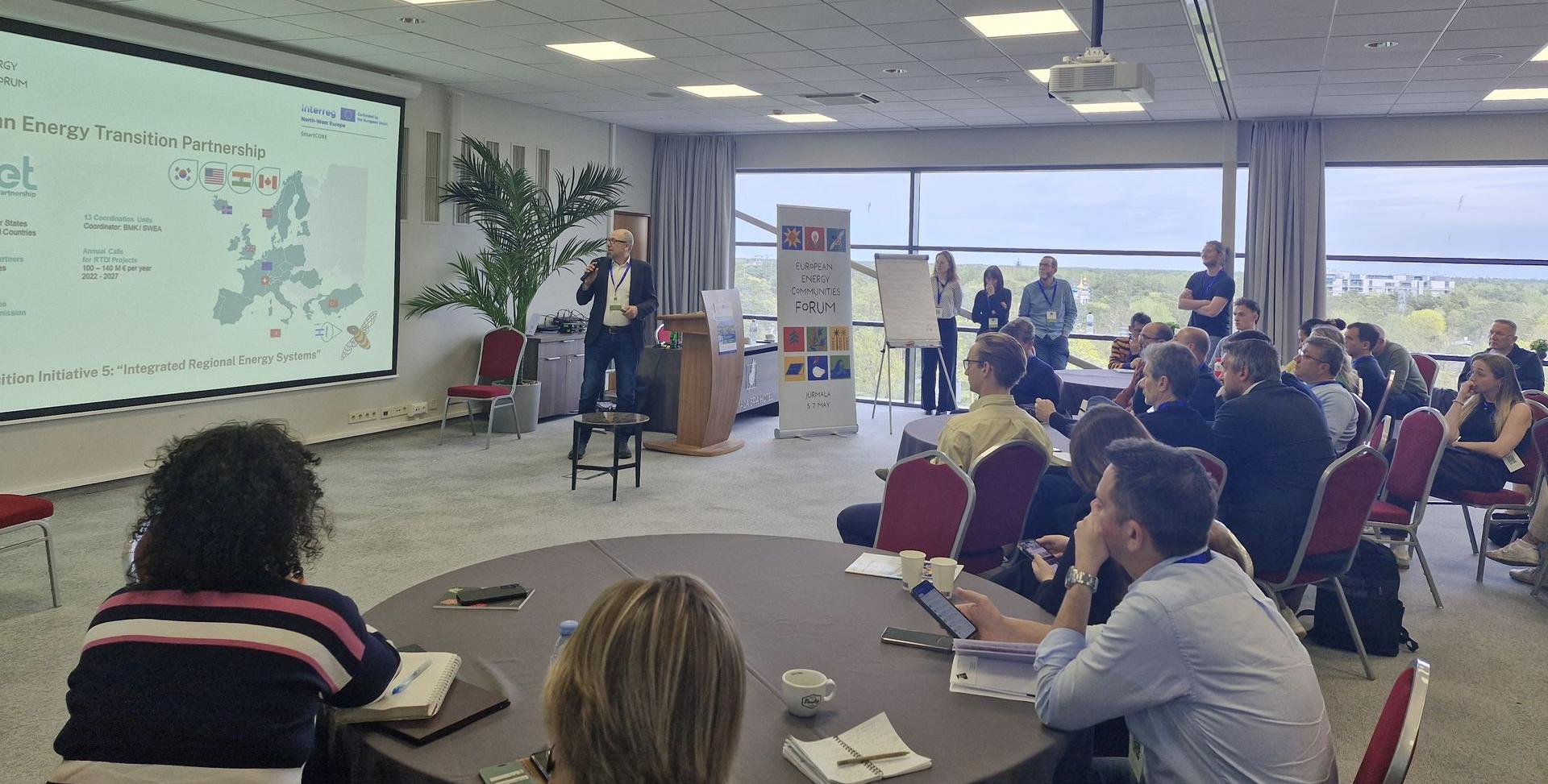
Michael Hübner, representing the NoREST Initiative and the Clean Energy Transition Partnership, advocated for integrated energy systems in which new and existing technologies and solutions interoperate in purposeful and coherent ways. In this vision of the energy transition, citizens are not passive beneficiaries but active co-designers of the systems that serve them. Hübner introduced the Regional Energy System Transition Labs (REST Labs), which is a European network designed to connect community energy practitioners with Research, Development, Technology, and Innovation (RDTI) ecosystems, helping to translate cutting-edge knowledge into real-world community applications.
A movement ready for the next challenge
The session demonstrated the community energy movement's growing appetite for flexibility solutions. Through projects like SmartCORE, energy communities across Europe are finding the tools, knowledge, and peer inspiration they need to move forward, learning from practitioners operating in diverse regional contexts and translating those lessons into concrete action.