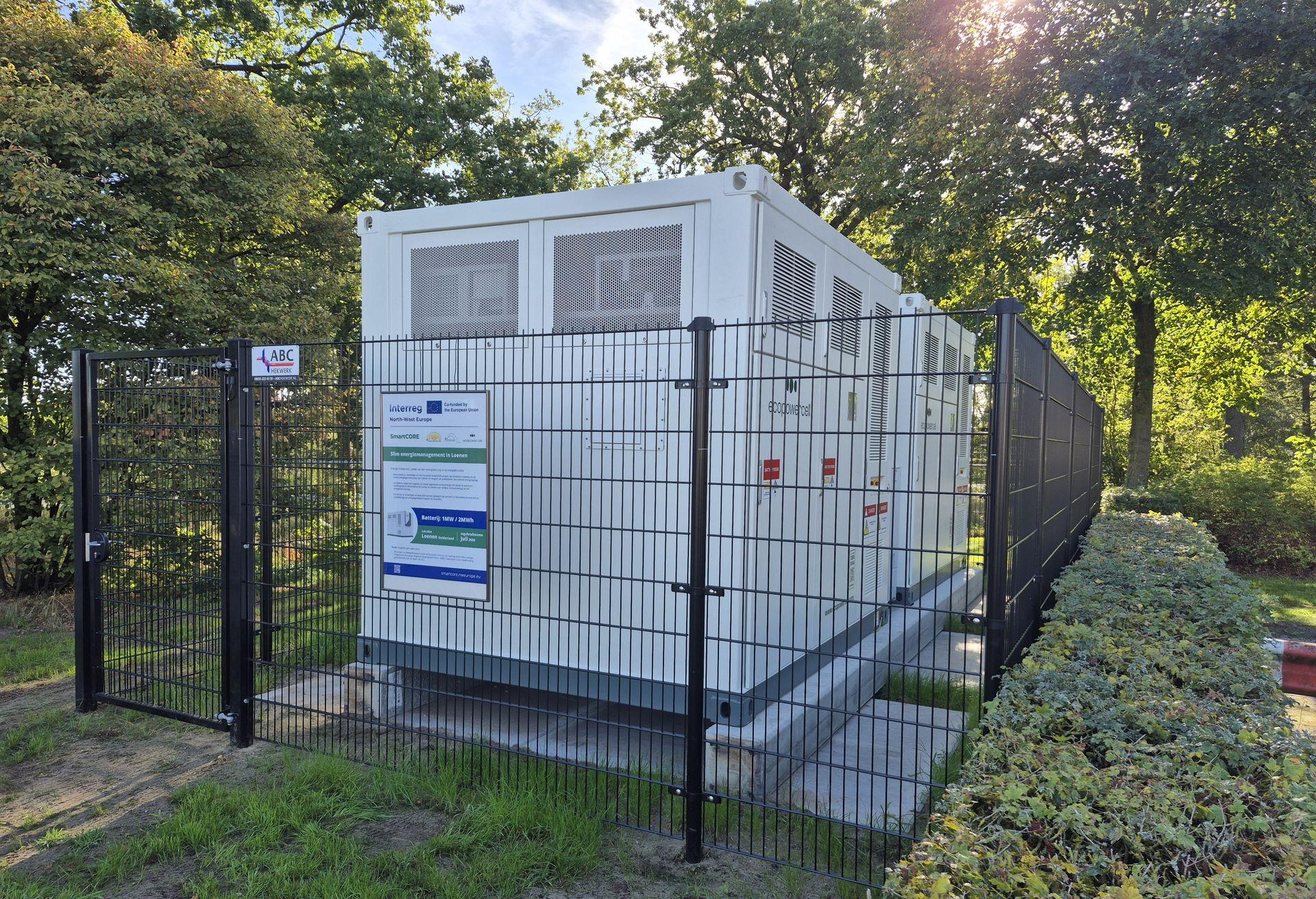
In July 2026, Energy Cooperative Loenen (ECL) installed a 1 MW / 2 MWh battery energy storage system alongside its existing 900 kWp cooperative solar rooftop installation. This marks a major step for the SmartCORE Dutch pilot.
Since 2020, ECL has been generating approximately 850 MWh of renewable electricity annually. But grid congestion, fluctuating electricity prices and periods of negative market prices are creating new challenges for renewable energy producers.
The battery enables ECL to move beyond simply generating renewable electricity towards actively managing when and how energy is supplied to the grid.
A new business model for energy communities
The battery consists of two outdoor containers using lithium iron phosphate (LFP) technology, providing 1 MW of power and 2 MWh of storage capacity.
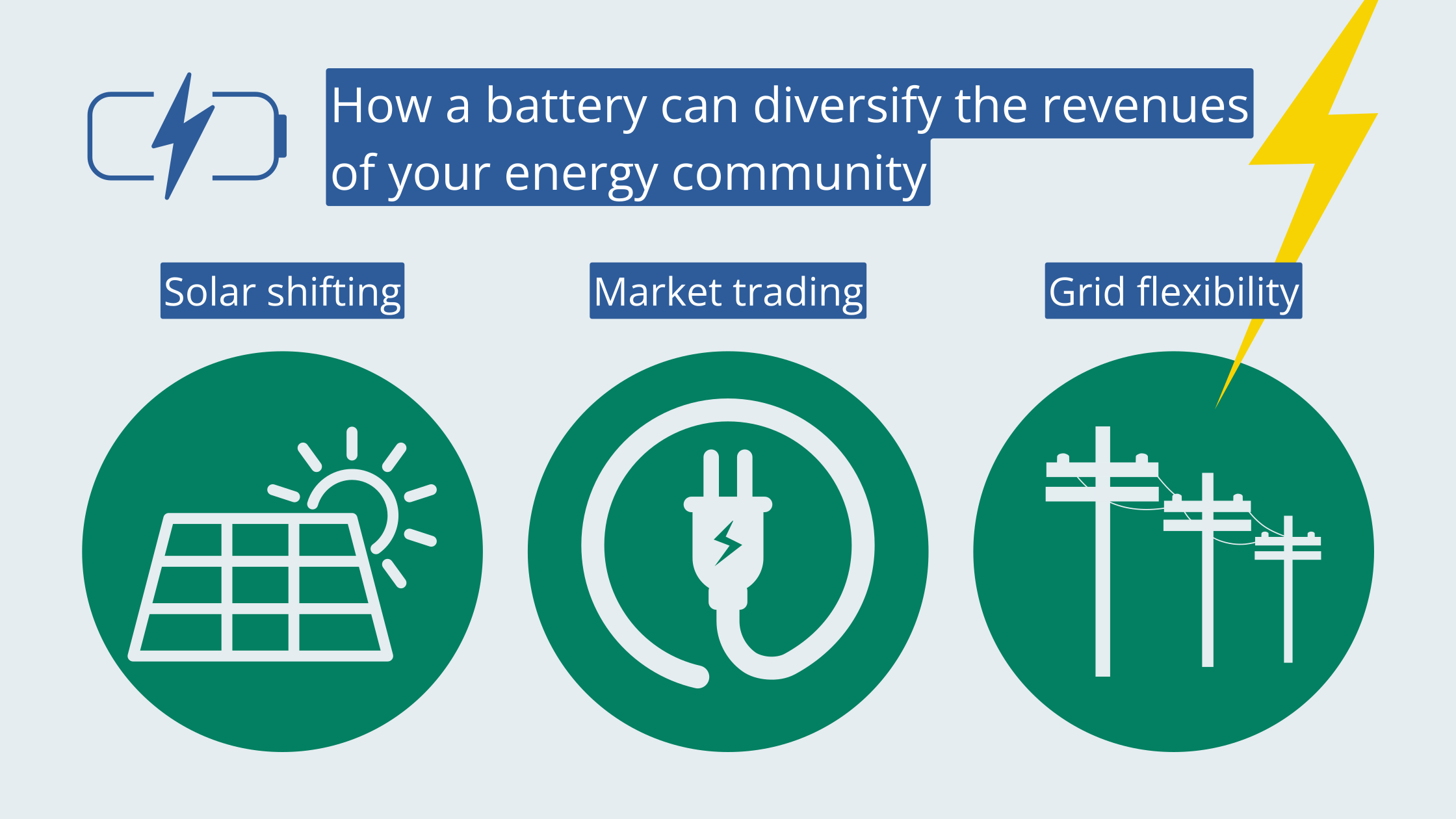
Its business model combines several potential revenue streams:
- Solar shifting: storing surplus midday solar and delivering it when electricity is more valuable.
- Market trading: charging when prices are low or even negative and discharging when they are high.
- Grid flexibility: providing services to relieve grid congestion.
The financing also shows the strength of cooperative
ownership. SmartCORE, supported by Interreg North-West Europe, contributes 60%
of the investment; the remaining 40% was raised through a community bond issue.
Local investor interest exceeded the target, reaching 133% of the amount
sought.
With this battery, we are taking an important step from producing renewable electricity to actively and integrally managing energy. The real innovation is not the battery itself, but the opportunity for a local energy cooperative to participate in energy and flexibility markets, while keeping the benefits within the community.André Zeijseink, Chairman, Energy Cooperative Loenen
Overcoming technical and regulatory challenges
The battery installation required navigating several interoperability challenges at technical, regulatory and organisational levels.
A key challenge was integrating the battery with the existing solar installation while respecting grid connection limitations. This involved complex arrangements for grid access, separate metering, electricity supply contracts and compliance with Dutch energy regulations.
The cooperative also had to address safety requirements, permitting procedures and the selection of suitable battery technology, energy management solutions and flexibility market opportunities.
The battery is designed not only to store solar electricity but also to participate in electricity and flexibility markets. This requires coordination between ECL, energy supplier Samen OM, battery supplier Ecopowercell, grid operators Liander and TenneT, metering specialists and energy market partners.
A learning opportunity for North-West Europe
The installation is only the beginning. The next phase will focus on testing smart energy management strategies, evaluating market opportunities and exploring how battery flexibility can support the electricity grid.
For SmartCORE, Loenen provides a real-life demonstration of how community-owned energy generation and storage, innovative business models and smart energy management can work together.
The lessons learned — particularly regarding grid access, regulatory barriers, market participation, battery flexibility and cooperative financing — will be valuable for energy communities throughout North-West Europe.
The Loenen battery shows that energy communities can evolve from “mere” renewable energy producers into active participants in tomorrow's flexible energy system.